

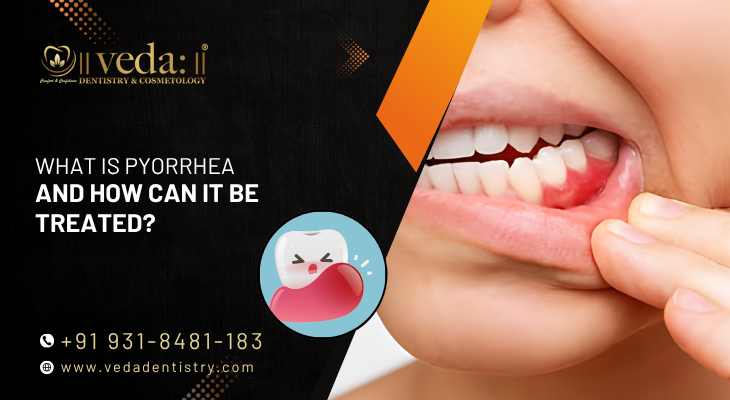
Let’s imagine your gums as the foundation of a house.
You don’t really think about it every day. It quietly does its job, holding everything in place. But if the foundation starts weakening, small cracks appear first… and if ignored, bigger problems follow.
Pyorrhea isn’t something that appears overnight. It builds slowly, often quietly, and by the time it gets attention, it’s already been around for a while.
If you’ve come across the term pyorrhea treatment and wondered what it actually involves, let’s walk through it step by step.
“Pyorrhea” might sound like a heavy word, but its meaning is quite straightforward.
It comes from Greek:
“Pyo” = pus
“Rrhea” = flow
In modern dentistry, pyorrhea refers to advanced gum disease (periodontitis): a condition where infection affects not just the gums, but also the structures supporting your teeth.
Think of it as gum trouble that has been around long enough to go deeper, from the surface of the gums down to the bone that holds your teeth in place.
That’s why timely pyorrhea treatment matters; it helps control the condition before it begins to affect the strength and stability of your teeth.
Pyorrhea doesn’t always behave the same way. Dentists usually see it in three forms, depending on how quickly it progresses and how severe it becomes.
This is the most common type and is usually seen in adults. It develops gradually over time due to long-term plaque and tartar buildup. The tricky part is that it often progresses quietly, with mild symptoms that are easy to ignore until noticeable damage has already occurred.
This type progresses faster and may affect younger individuals as well. It can lead to quicker loss of bone support around the teeth if not addressed early. Because of its speed, early diagnosis and pyorrhea treatment play a very important role in controlling it.
This is less common but more severe. It involves tissue damage and may be associated with factors like weakened immunity, stress, or underlying health conditions. Patients may notice pain, ulcers, or a sudden worsening of gum health, which requires prompt dental care.
Gum issues rarely start with pain. Instead, they show up as small, everyday changes that don’t feel urgent at first.
A feeling of looseness in teeth (in later stages)
These signs often come and go, which makes them easy to dismiss. But they’re usually early indicators that your gums need attention.
Most cases of pyorrhea start with something very basic: plaque, a soft, sticky layer of bacteria that forms on teeth every day.
It hardens into tartar (which cannot be removed by just brushing)
Tartar irritates the gum line
Bacteria begin to infect the surrounding tissues
The infection slowly spreads deeper into the gums and bone
Inconsistent or improper brushing and flossing
Tobacco use in any form
Hormonal changes (like during pregnancy)
Medical conditions such as diabetes
Stress, which can affect immunity
Poor dietary habits
The important thing to remember is that while the condition develops gradually, it is largely preventable with consistent care.
Here’s where the “foundation” becomes important.
The gums begin to recede and lose their grip around the teeth
Pockets form between the teeth and gums, trapping bacteria
The bone that supports the teeth starts to weaken
Teeth may gradually become loose
In severe cases, tooth loss can occur
This process doesn’t happen suddenly; it’s slow and progressive. But once it reaches an advanced stage, treatment becomes more extensive.
That’s why early pyorrhea treatment can make a significant difference in preserving your natural teeth.
When people hear “treatment,” they often imagine something complicated or painful.
remove infection and help the gums heal naturally.
If the condition is advanced, additional procedures may be suggested to restore gum health and protect the supporting structures of the teeth.
At Veda Dentistry & Cosmetology, gum treatment in East Delhi is planned based on the severity of the condition. Consulting the best dentist helps you clearly understand your specific situation and choose the right approach without confusion.
Prevention: The Part That Actually Matters Most
If gum health had a secret, it would be consistency.
Simple daily habits can go a long way in preventing the need for extensive gum treatment:
Eating a balanced diet that supports oral health
These small actions, when done regularly, help maintain healthy gums over time.
In its early stages, gum disease can be reversed with proper oral hygiene and professional cleaning. However, in advanced stages like pyorrhea, the damage to supporting tissues may not be fully reversible. That said, with the right pyorrhea treatment, the condition can be effectively controlled, and further damage can be prevented.
Not necessarily. Many people with pyorrhea do not experience noticeable pain in the early stages. This is one of the reasons it often goes undetected. Symptoms like bleeding gums, swelling, or bad breath are usually earlier indicators than pain.
A routine dental visit every 6 months is generally recommended. However, if you already have gum-related concerns, your dentist may suggest more frequent visits to monitor your condition and maintain gum health.
Gum problems don’t usually demand attention loudly; they show up gently and build over time.
If you’ve been noticing signs or are simply curious about pyorrhea treatment, a consultation can help you understand your gum health better and take the right steps without stress.
At Veda Dentistry & Cosmetology, the approach is simple: clear explanations, calm guidance, and treatments that focus on long-term oral health. A visit to the best dentist in East Delhi, like ours, can help you stay one step ahead of potential gum issues.
Visit: Veda Dentistry and Cosmetology
Address: 12, in front of Karkardooma Court Metro Station, Arjun Gali, A G C R Enclave, Anand Vihar, Delhi, 110092
Phone: +91 9318481183