

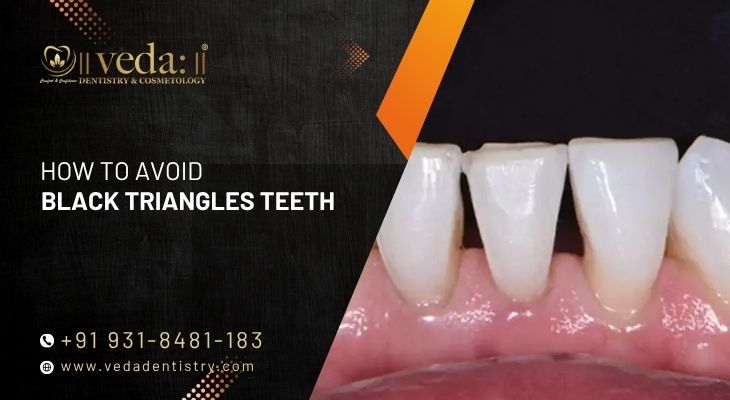
Small dark gaps near the gumline, commonly referred to as black triangles are a frequent concern, especially after orthodontic or cosmetic dental treatments.
Patients often notice them only after their teeth have been aligned or reshaped, which can be frustrating. After investing in a better smile, these gaps may make the result feel incomplete.
While black triangles may appear minor, they are not just an aesthetic issue. They can also affect how easy your teeth are to clean and may influence long-term gum health.
Understanding why they form and how to prevent them is key to achieving a natural, balanced smile.
Black triangles occur when the gum tissue between two teeth, known as the papilla, does not completely fill the space.
In a healthy smile, this gum tissue fits snugly between teeth, creating a seamless appearance. When it recedes or fails to fill the gap, a small triangular space becomes visible.
This space appears dark because it reflects shadow rather than tooth or gum tissue.
Black triangles do noOne of the most common causes is loss of gum tissue. When gums recede due to inflammation, aggressive brushing, or periodontal disease, the papilla reduces in height, exposing gaps between teeth.t develop randomly. They are usually the result of specific biological or structural factors.
One of the most common causes is loss of gum tissue. When gums recede due to inflammation, aggressive brushing, or periodontal disease, the papilla reduces in height, exposing gaps between teeth.
Gum tissue is supported by the underlying bone. When bone levels decrease often due to gum disease the gum cannot maintain its original position, leading to visible spaces.
The natural shape of teeth plays a significant role. Teeth that are more triangular (wider at the top and narrower near the gumline) leave more space at the base when they are aligned.
Even with healthy gums, this shape can create black triangles.
Aligning teeth without considering gum position and tooth proportions can sometimes reveal or create these gaps.
For example, when crowded teeth are straightened, the contact points between them may move upward, leaving space near the gums.
Although small, black triangles can have noticeable effects.
From an aesthetic perspective, they can disrupt the continuity of a smile, especially in the front teeth where they are most visible.
Functionally, these gaps can trap food more easily, making oral hygiene more challenging. This increases the risk of plaque accumulation and may contribute to gum irritation over time.
If not managed properly, they can affect both the appearance and health of your smile.
The good news is that black triangles can often be prevented or significantly improved with the right approach.
Healthy gums are the foundation of a gap-free smile. Regular professional cleanings, proper brushing techniques, and consistent flossing help prevent gum inflammation and recession.
Orthodontic treatment should not focus only on straightening teeth. It should also consider gum levels, tooth proportions, and how contact points will change after alignment.
Careful planning reduces the likelihood of creating visible gaps.
Interproximal reduction (IPR) involves making very small adjustments to the sides of teeth. This changes the contact area between teeth, allowing them to sit closer together near the gumline.
When done conservatively, it can significantly reduce black triangles without compromising tooth health.
In some cases, composite bonding can be used to modify the shape of teeth and close visible spaces.
By slightly widening the contact area, bonding helps eliminate gaps while maintaining a natural appearance.
For certain cases involving significant tissue loss, soft tissue procedures may be considered to improve gum fill.
These are more specialised treatments and are recommended only when appropriate for the patient's condition.
At Veda Dentistry, preventing black triangles begins with planning, not correction.
We evaluate gum health, bone levels, and tooth shape before starting orthodontic or cosmetic treatments. This allows us to anticipate potential gaps and address them proactively.
Where needed, we combine techniques such as conservative reshaping, bonding, or gum management to create a balanced and natural result.
Our focus is not just on straight teeth but on a smile that looks complete, harmonious, and healthy.