

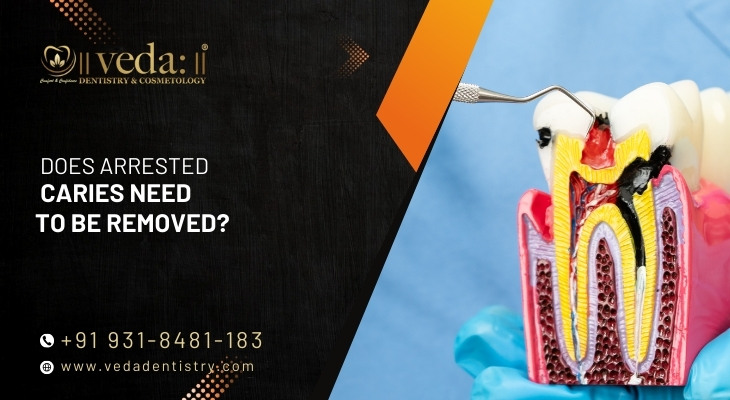
Arrested caries often reveal themselves in the most confusing way, some patients walk into our clinic in East Delhi looking extremely puzzled. They point to a dark spot on their tooth, sometimes black, sometimes brown, sometimes chalky, and ask:
Some patients walk into our clinic in East Delhi looking extremely puzzled. They point to a dark spot on their tooth, sometimes black, sometimes brown, sometimes chalky, and ask:
“Doctor… is this a cavity or… something else?”
If you’ve noticed a spot that looks like a cavity but doesn’t hurt, doesn’t grow, and seems oddly… calm, you’re probably dealing with arrested caries.
And yes, this mysterious term confuses everyone at first.
So in true Delhi style, the same energy with which we explain the difference between chaat from Shahdara vs. Lajpat Nagar, we’re breaking it down simply and clearly.
Before we talk about arrested caries treatment in East Delhi offered at Veda Dentistry, you need to understand what they actually are. Let’s take it step by step.
Arrested caries are basically paused cavities.
Think of them as cavities that started forming but then stopped halfway, as if they got tired of causing trouble and decided to take early retirement.
In simple terms:
A normal cavity = actively damaging your tooth
Arrested caries = no longer progressing or causing destruction
At Veda Dentistry, we sometimes meet patients who’ve had arrested caries for years without knowing it; it is usually discovered during routine dental checkups.
You may assume only brushing prevents cavities, but the truth is a little more fascinating.
Arrested caries form when:
Acid-producing bacteria stop getting fuel (less sugar, better hygiene)
Saliva neutralizes acids (saliva is the unsung hero of dentistry)
Fluoride strengthens the surface
The patient’s diet improves
The body naturally remineralizes the weakened area
So yes, in some cases, your body helps stop the cavity’s progress. Not bad, right?
But here’s the twist:
Just because caries are arrested doesn’t mean they’ll stay arrested forever. Lifestyle changes, diet changes, or bacterial shifts can reactivate them.
That’s why getting arrested caries treatment in East Delhi at Veda Dentistry is important because monitoring is key.
Most people think cavities always look scary and painful. Arrested caries don’t.
Here’s a little cheat-sheet:
Arrested Caries Usually Look Like:
Active Caries Look Like:
Think of arrested caries as the calm neighbour who minds their own business…
Active caries are the loud ones who keep asking for attention.
Short answer:
Not always.
Not urgently.
And not without examination.
Arrested caries are inactive, which means they’re not harming the tooth anymore.
So we evaluate them based on:
Sometimes we leave them as they are, especially if removing them means taking healthy tooth structure unnecessarily.
Sometimes we do conservative tooth decay treatment to smooth the surface, seal it, or strengthen it to avoid future reactivation.
And sometimes, especially if the spot is large, we fill it to prevent food packing or future decay.
The key?
Each case is unique, and your dentist should decide after a proper assessment.
Even paused cavities aren’t always innocent.
We recommend treatment if:
The area traps food regularly
It risks reactivation
The tooth surface is rough or plaque-prone
There is gum recession around the spot
It affects the smile’s appearance
The patient has high cavity risk
Children’s teeth are involved (they change faster)
At Veda Dentistry, our goal is always to conserve your natural tooth structure, so we treat only when necessary.
They don’t worsen on their own, they don't spread, and they don’t cause damage anymore. But depending on where they are:
You might ignore them
You might treat them for cosmetic reasons
You might want to prevent new stains around the same area
Dentistry works the same way; what matters is prevention and monitoring.
Because they look like real cavities.
At Veda Dentistry, we create prep-conservative veneer transformations, where beauty is built on strength, not sacrifice.
We reassure them that:
Not all black spots are active decay
Not everything needs drilling
Some cases are better observed than treated
This is why professional diagnosis is essential before deciding.
When you visit us for arrested caries treatment in East Delhi, we typically:
Check hardness
Arrested caries feel hard; active caries feel soft.
Use cavity-detecting tests
We assess progress or activity.
Examine your diet & brushing
Patterns tell us whether caries may reactivate.
Take X-rays
To check if there’s hidden decay underneath.
Decide whether to fill, seal, or monitor
Every plan is fully personalized.
Our goal?
To keep your natural tooth safe while avoiding unnecessary procedures.
Here’s our simple “Approved” checklist for prevention:
Brush twice daily
Use fluoride toothpaste
Rinse after sweets (gulab jamun, jalebi lovers, looking at you!)
Don’t let sugar sit on your teeth
Drink plenty of water
Floss daily
Get a dental cleaning every 6 months
Small habits = long-term smile safety.
Not always. Arrested caries are inactive, meaning they have already stopped progressing. We fill them only when they trap food, affect the tooth’s strength or appearance, or risk becoming active again. Many patients simply need monitoring and gentle care rather than drilling or restoration.
Arrested caries usually appear dark, hard, and smooth to the touch. They don’t cause pain or sensitivity and remain the same size for months or years. Only a dentist can confirm the activity level through clinical examination and sometimes X-rays.
Arrested caries form when conditions in the mouth shift in favour of healing, better brushing, fluoride exposure, reduced sugar intake, and healthy saliva flow all help. The body naturally remineralizes early decay when acidity is controlled. Essentially, the cavity “runs out of fuel” and stops advancing.
The cost depends on whether the caries needs monitoring, sealing, or filling. Smaller areas cost less and often only require fluoride-based care, while larger spots may need restorations. After examining your teeth, we can provide a clear estimate based on the extent and type of treatment needed.
Arrested cavities usually appear brown or black and have a shiny, smooth surface. They don’t look soft or chalky like active decay. Some appear as dark stains on grooves or near the gumline but remain stable without spreading.
Short answer: Only when necessary.
Long answer: Let a professional decide after proper examination.
Arrested caries don’t behave like active decay, so they often don’t need drilling or removal. But they should always be monitored, because changes in diet, hygiene, or bacterial activity can reactivate them.
If you want clarity, comfort, and honest guidance, visit us for arrested caries treatment in East Delhi. Our team at Veda Dentistry will evaluate your tooth thoroughly and recommend the most conservative, safe, and sensible plan for your long-term oral health.
Book your visit at Veda Dentistry, where your smile is cared for with expertise, transparency, and a friendly touch.
Book An Appointment